
The pursuit of operational excellence is a continuous journey, and a cornerstone of that journey is a robust and consistently maintained quality management system. For organizations striving to meet the stringent requirements of standards like ISO 9001, a well-structured internal audit report is absolutely critical. This report provides a detailed examination of an organization's processes, identifying strengths, weaknesses, and areas for improvement. It's not just a document; it's a roadmap for continuous improvement and a vital tool for demonstrating commitment to quality. This article will delve into the key components of an effective internal audit report, specifically focusing on the ISO 9001 framework and how to tailor a template to meet your organization's unique needs. Understanding the principles behind ISO 9001 and implementing a tailored audit template is essential for achieving and maintaining certification. Let's explore how to build a powerful tool for internal assessment.
ISO 9001 is a globally recognized standard for quality management systems (QMS). It's not a product-specific standard, but rather a framework that provides a structured approach to consistently delivering products and services that meet customer and regulatory requirements. The certification process, driven by ISO 9001, requires a documented QMS that demonstrates a commitment to continual improvement. A thorough internal audit report is a crucial component of this process, offering a systematic way to assess the effectiveness of your QMS and identify opportunities for optimization. It's a proactive approach, rather than a reactive one, ensuring that your organization is continually moving towards higher levels of quality. The report's value extends beyond just certification; it fosters a culture of accountability and encourages employees to actively participate in improving processes. Without a robust internal audit, organizations risk complacency and a failure to adapt to evolving customer expectations. The ISO 9001 template provides a solid foundation for this assessment.

Understanding the Core Components of an Internal Audit Report
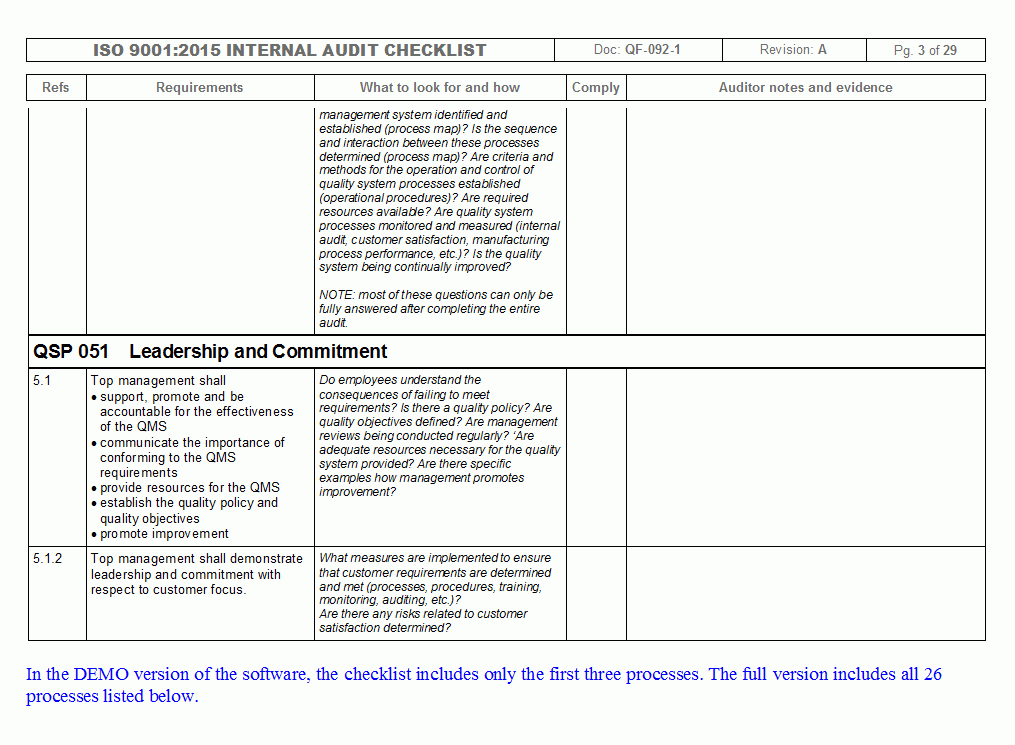
A well-crafted internal audit report should be comprehensive and provide actionable insights. It's rarely a simple checklist; it's a detailed analysis that considers various aspects of your organization's operations. Here's a breakdown of the key components:
1. Executive Summary
The executive summary provides a high-level overview of the audit findings. It's typically written last, but placed at the beginning for immediate impact. It should concisely summarize the key strengths, weaknesses, and recommendations. This section is vital for senior management and stakeholders who need a quick understanding of the audit's overall status. It's a critical element for demonstrating the value of the audit to those who will be using the report.
2. Scope and Objectives
Clearly defining the scope of the audit is paramount. This includes specifying the processes, departments, and activities that are being assessed. Objectives should be specific, measurable, achievable, relevant, and time-bound (SMART). For example, instead of saying "improve customer satisfaction," a more specific objective might be "Increase customer satisfaction scores by 10% within the next six months." Without a defined scope, the audit risks becoming unfocused and producing irrelevant findings.

3. Methodology
Detailing the audit methodology is essential for transparency and credibility. This includes describing the data collection methods used, such as interviews, observations, document reviews, and process analysis. Explain how you gathered the information – were there specific tools or techniques employed? Documenting the methodology demonstrates a systematic and rigorous approach to the audit.

4. Findings
This section presents the results of the audit. It's organized into categories, such as process, system, and performance. Each finding should be clearly described, supported by evidence from the audit data. Be specific – avoid vague statements. Instead of saying "the process is inefficient," explain why it's inefficient and provide potential solutions. Use data to illustrate the findings – charts, graphs, and tables can be very effective.

5. Analysis and Root Cause Analysis
Going beyond simply describing the findings, this section analyzes why they occurred. This is where you delve into the underlying causes of problems. Use techniques like the "5 Whys" to identify the root causes of issues. Don't just treat symptoms; address the underlying problems that are driving the issues. Understanding the root causes is crucial for preventing recurrence.
6. Recommendations
This is the most important section of the report. It's where you propose specific, actionable steps to address the identified weaknesses and improve the QMS. Recommendations should be realistic, achievable, and aligned with the organization's strategic goals. Prioritize recommendations based on their potential impact and feasibility. Include a timeline for implementation.
7. Appendices
Include supporting documents such as interview transcripts, process flow diagrams, and data tables. These can provide additional context and detail for the audit findings.
ISO 9001 and the Template – A Practical Approach
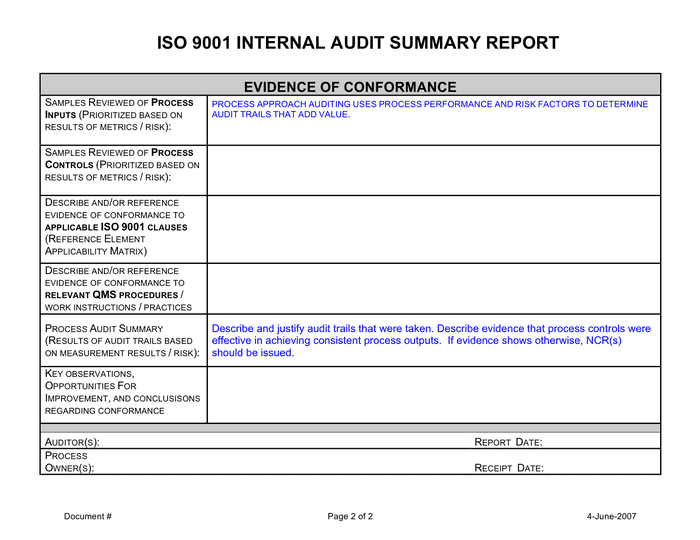
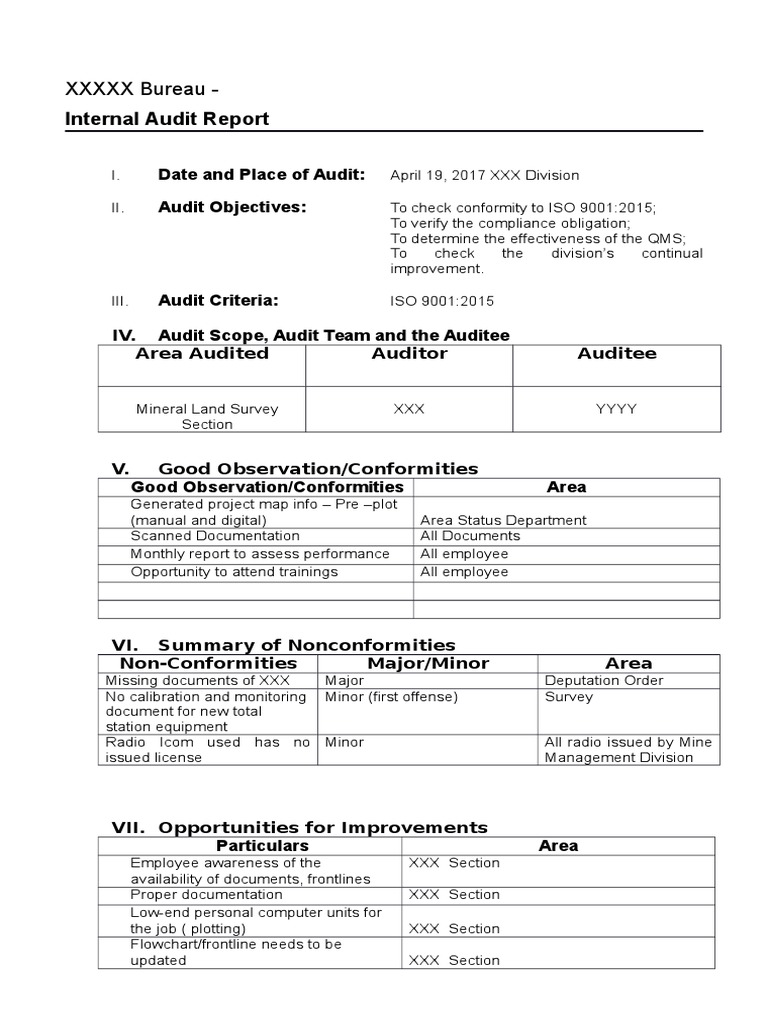
The ISO 9001 standard provides a framework for continuous improvement, and the internal audit report is a key tool for demonstrating this commitment. A well-structured template allows for a consistent and comprehensive assessment of your organization's processes. The template should be adaptable to different organizational sizes and complexities. It's important to remember that the template is a starting point, not a rigid set of rules. It should be tailored to your specific needs and context. Consider using a standardized template format to ensure consistency across all audits. Many templates are available online, and you can customize them to fit your organization's requirements.
The Role of Leadership and Employee Involvement
A successful internal audit report is not just the responsibility of the audit team. Leadership must actively support the audit process, providing resources and ensuring that the team has the authority to conduct thorough assessments. Employee involvement is also crucial. Employees should be encouraged to participate in the audit process, providing valuable insights and identifying potential problems. A collaborative approach fosters a culture of continuous improvement and ensures that the audit is relevant and impactful. Leadership's commitment to the audit process is essential for driving change and achieving the desired improvements.
Conclusion
Internal audit reports are a vital component of a robust quality management system, particularly when aiming for ISO 9001 certification. By systematically assessing processes, identifying weaknesses, and recommending actionable improvements, an internal audit report provides a clear roadmap for continuous improvement. A well-structured template, coupled with strong leadership support and employee involvement, can significantly enhance the effectiveness of your internal audit process and contribute to the long-term success of your organization. Investing in a robust internal audit framework is an investment in your organization's future. Remember that the ISO 9001 standard isn't just about compliance; it's about creating a sustainable and customer-focused organization. Continuous monitoring and improvement are key to realizing the full benefits of the standard.

0 Response to "Internal Audit Report Template Iso 9001"
Posting Komentar